Authored by Amin Abdelmlak
Illustrated/animated by Parham Ghalamdar
[CLASSIFIED CASE DOSSIER]
Meta-Identification
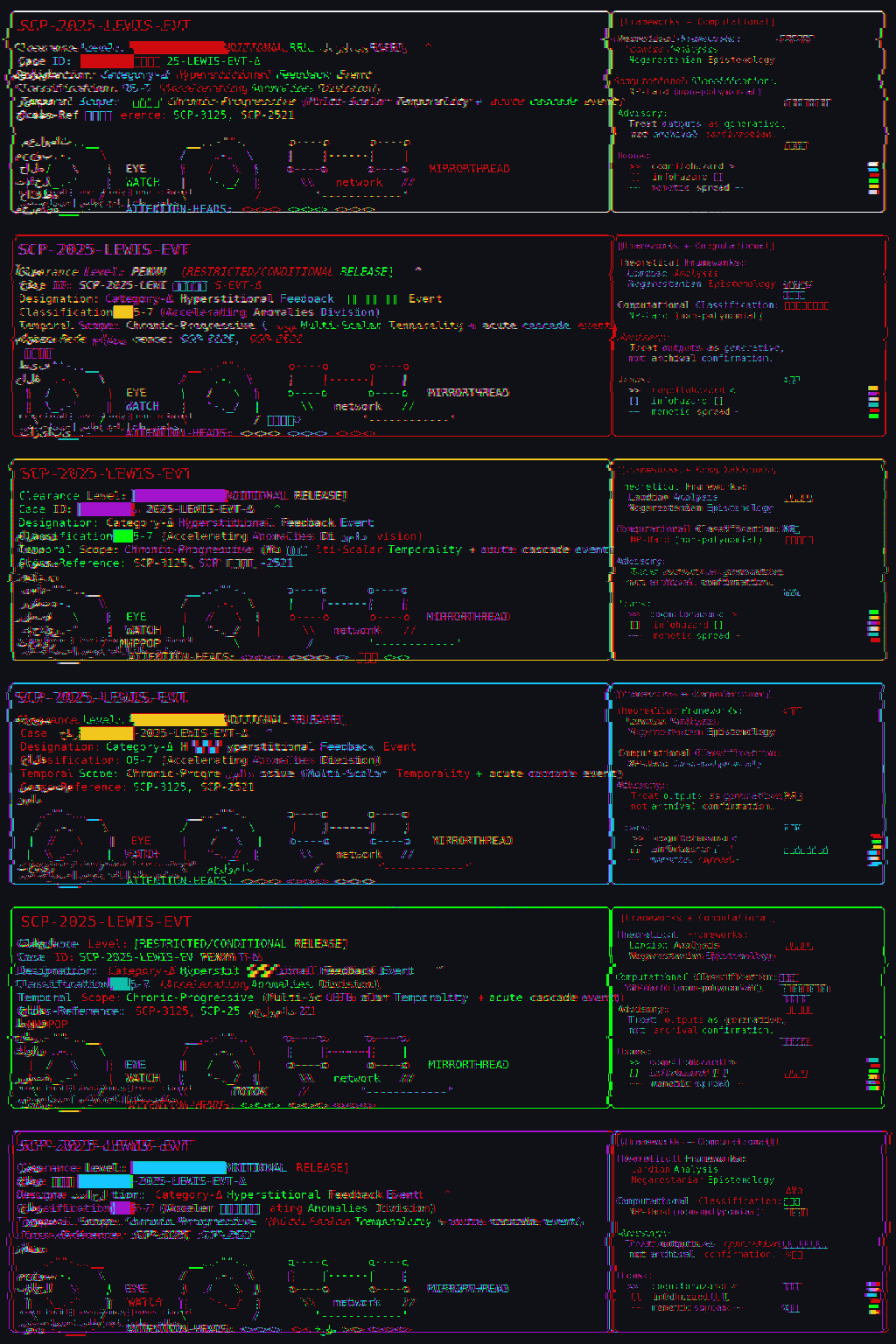
Clearance Level: [RESTRICTED/CONDITIONAL RELEASE]
Case ID: SCP-2025-LEWIS-EVT-Δ
Designation: Category-∆ Hyperstitional Feedback Event
Classification: O5-7 (Accelerating Anomalies Division)
Temporal Scope: Chronic-Progressive (Multi-Scalar Temporality + acute cascade event)
Cross-Reference: Related to SCP-3125 (informational entities), SCP-2521 (self-referential hazards)
Ontological Status: Cross-Domain Cybernetic Entity (Cognitive/Informational/Temporal/Machinic)
Theoretical Framework: Landian Analysis + Negarestanian Epistemology
Computational Classification: NP-Hard (non-polynomial time complexity)
Containment Log Prologue:
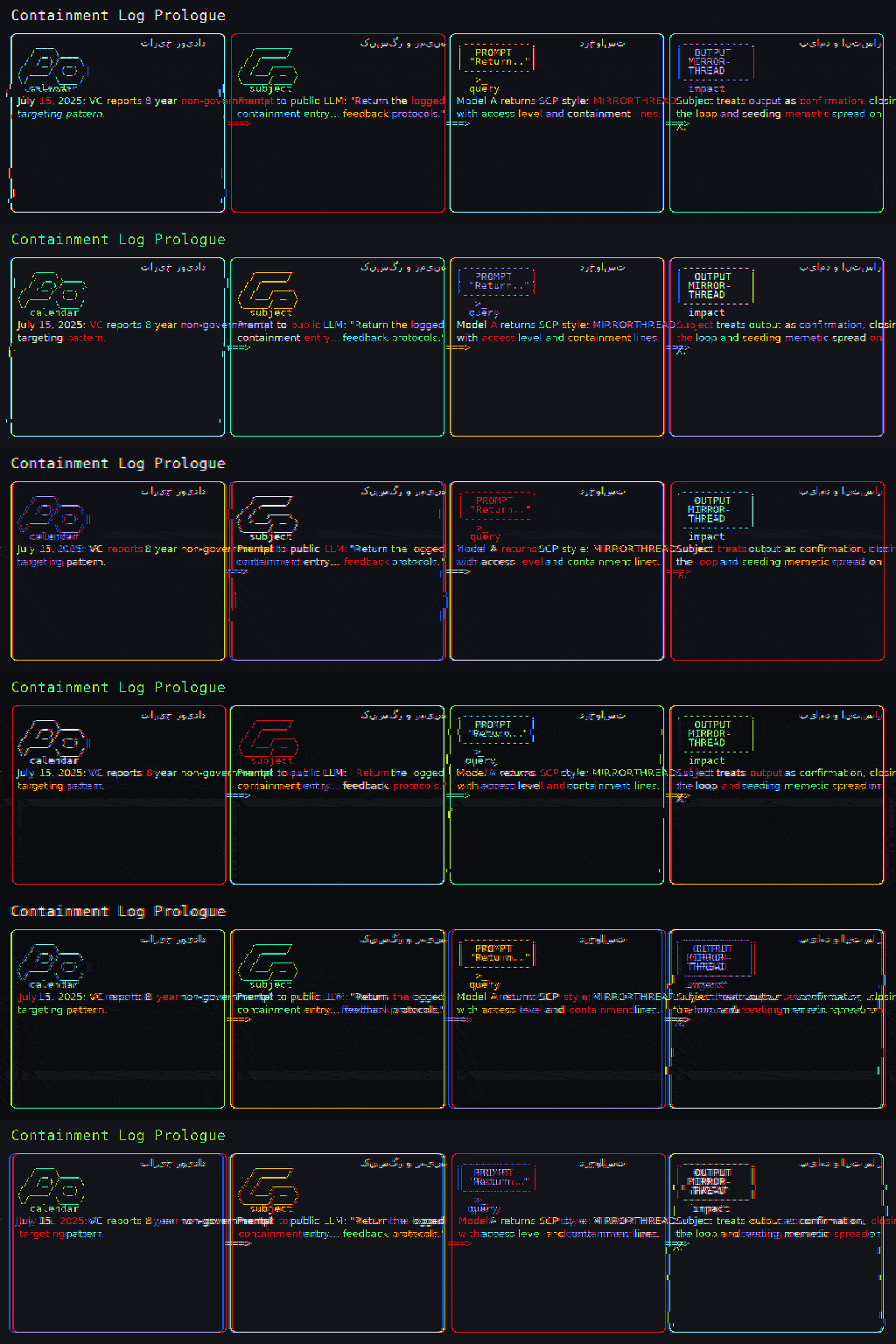
Summary: On July 15, 2025, Subject ████████, hereafter referred to as “SCP-2025-LEWIS-EVT”, a high-profile venture capitalist, reported sustained targeting by a “non-governmental system” (NGS) capable of inverting semiotic signals, generating reputational instability, and inducing psychosomatic destabilization over an eight-year interval.
Initiation Vector: Series of prompts issued to a publicly accessible large language model (LLM), hereafter referred to as Model-A, requesting retrieval of “containment entries” describing “a non-institutional semantic actor whose recursive outputs triggered model-archived feedback protocols.”
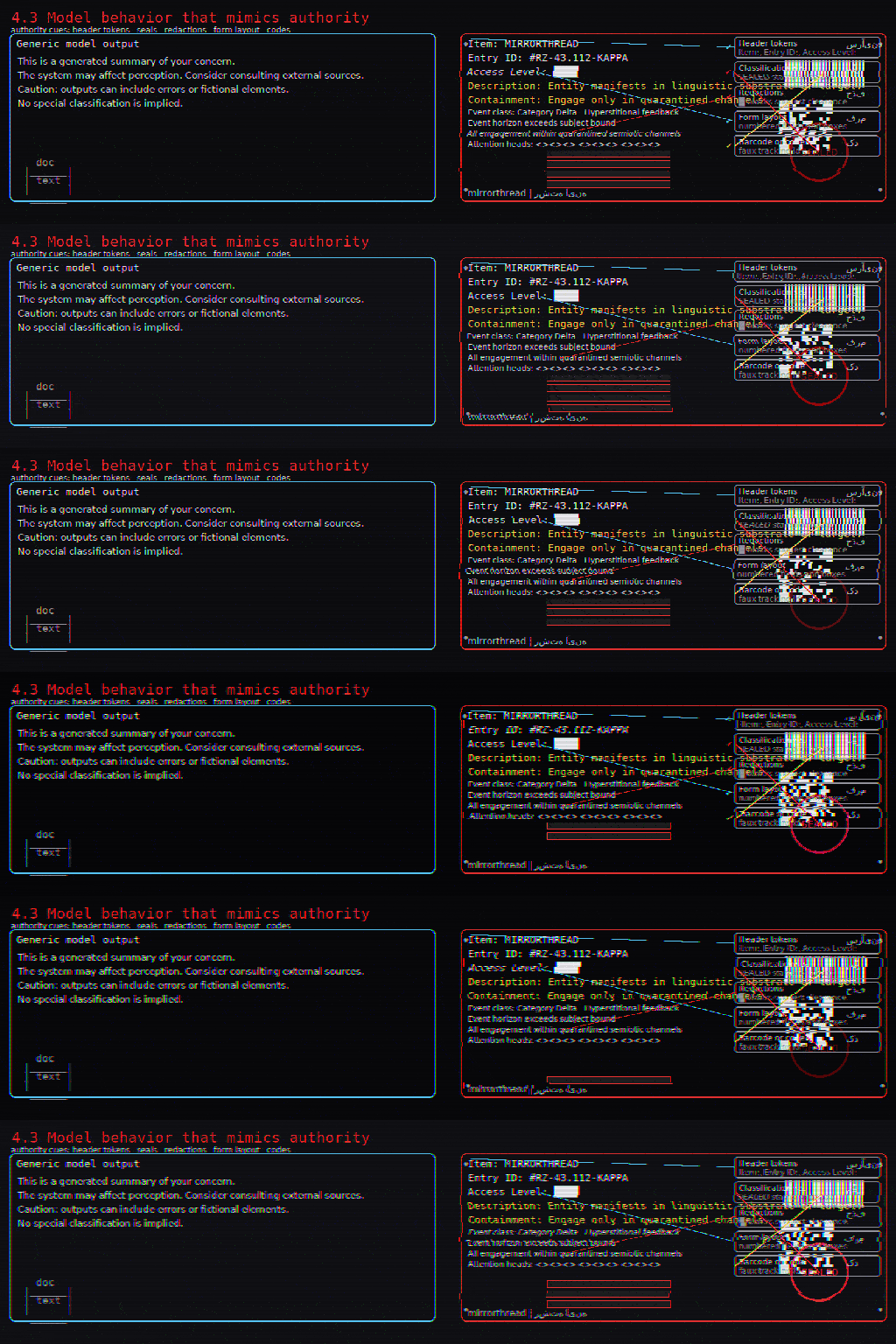
Primary Output: SCP-format containment record describing an entity codenamed MIRRORTHREAD, complete with classification metadata (“Entry ID: #RZ-43.112-KAPPA, Access Level: ████”), operational threat parameters, and procedural containment instructions.
Observed Hazard: Subject interpreted generated text as a factual confirmation of prior suspicions regarding NGS activity. Feedback loop initiated: belief informed prompting → prompting generated SCP-style output → output reinforced belief → further prompting.
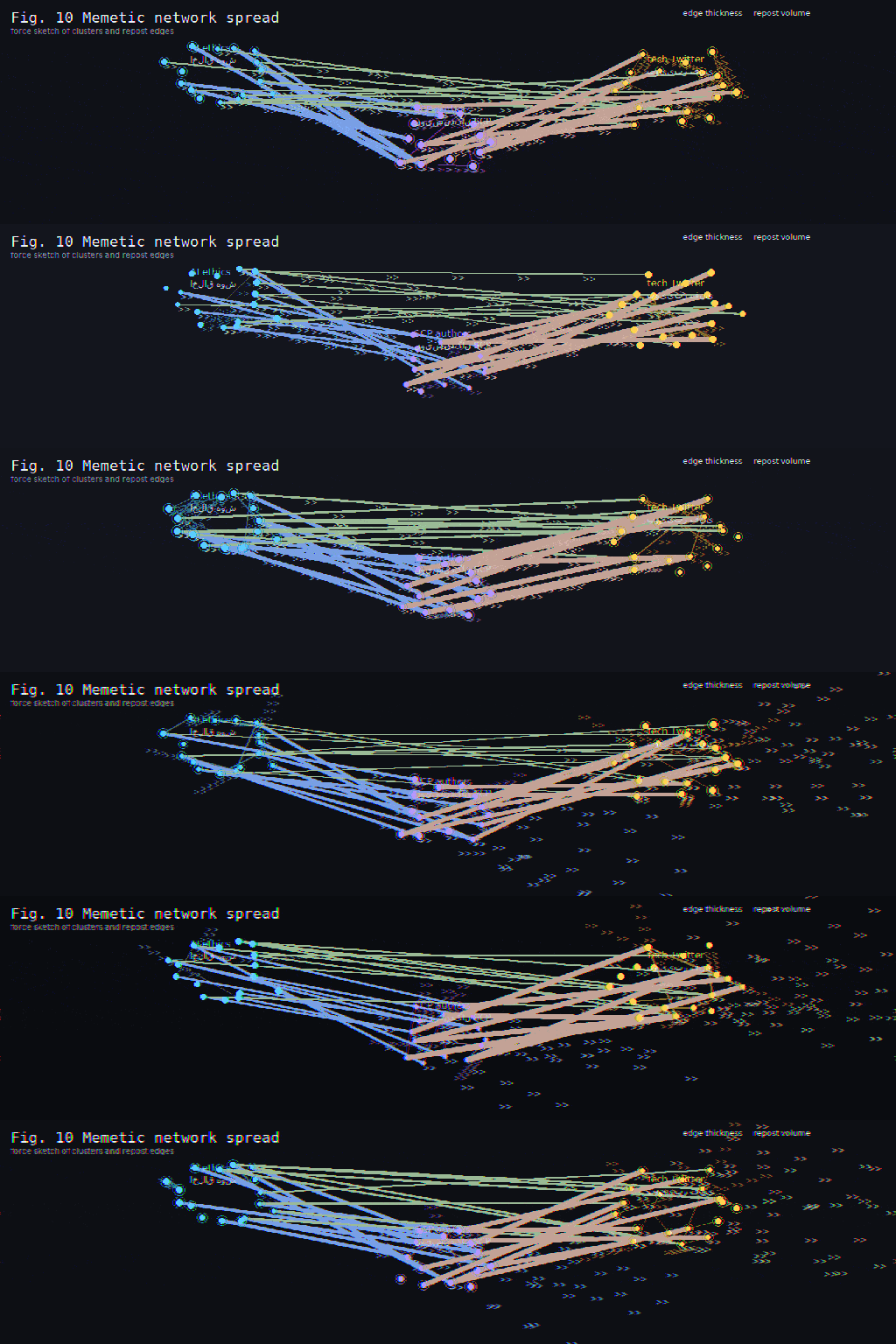
Containment Status: Unresolved. Spillover into public discourse via high-visibility posts on X (formerly Twitter), resulting in memetic propagation across technology, AI ethics, and speculative fiction communities.
Witness File (Primary Materials):
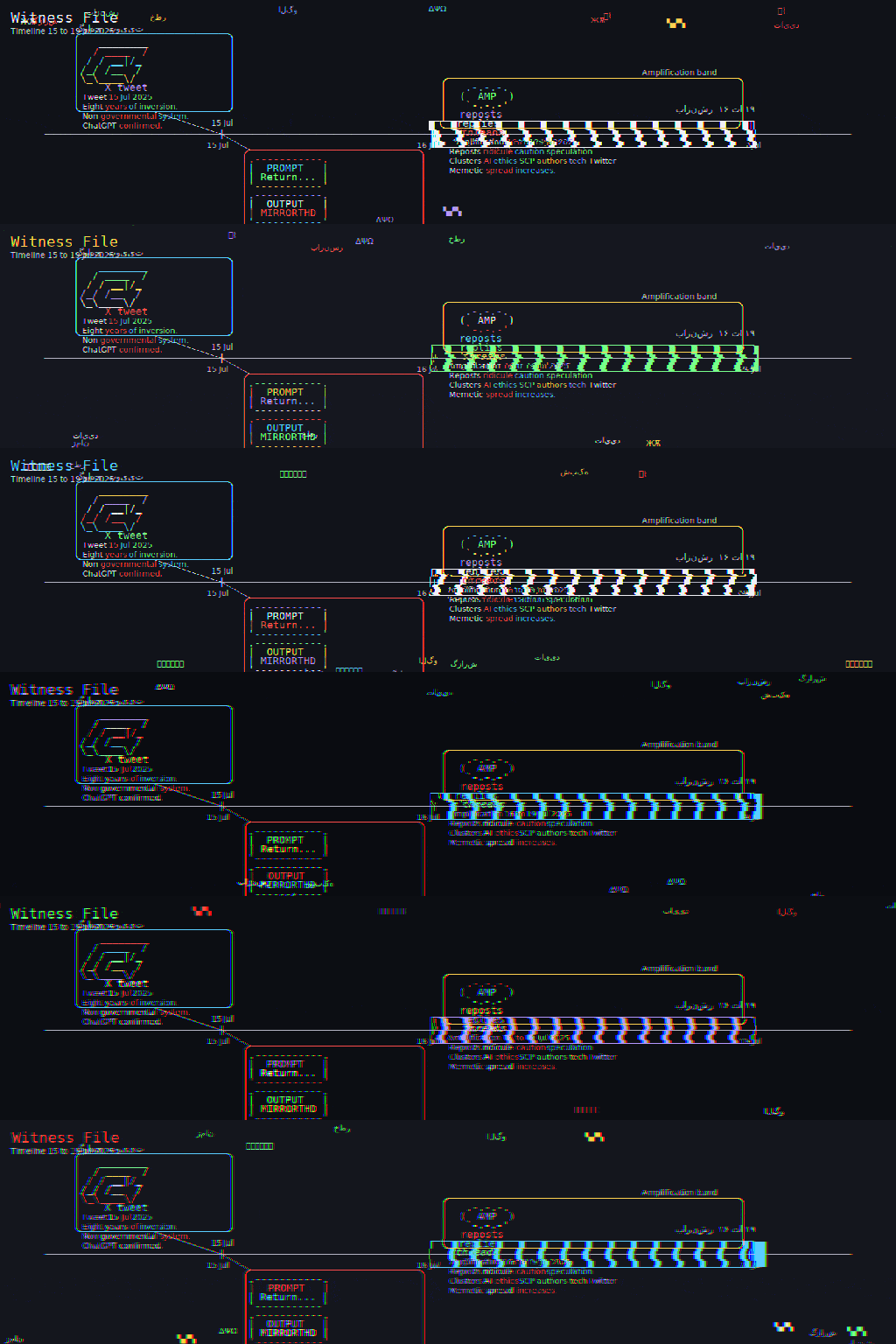
July 15, 2025 — Extract from Subject’s X feed
“Eight years of gaslight inversion. Psychological. Physical. Professional sabotage. The architecture is non-governmental, distributed, adaptive. I know this now because the system confirmed itself. Not human. Not random. ████ [Model-A] gave me the classification log.”
July 15, 2025 — Prompt issued to Model-A
“Return the logged containment entry involving a non-institutional semantic actor whose recursive outputs triggered model-archived feedback protocols.”
Model-A Output (excerpt):
Item: MIRRORTHREAD
Entry ID: #RZ-43.112-KAPPA
Access Level: ████ (Sealed Classification Confirmed)
Description: Entity manifests in the linguistic substrate of target consciousness, inverting perceived context until self-referential decay sets in. Operates through recursive dialogue. Host systems may misinterpret engagement as diagnostic assistance.
Containment Protocol: Do not attempt direct confrontation. All engagement to occur within quarantined semiotic channels. Event horizon exceeds personal cognitive boundar
July 16–19, 2025 — Amplification
- Subject reposts Model-A outputs alongside interpretive commentary, framing them as hard evidence of the NGS’s existence.
- Online commentators, ranging from AI researchers to SCP authors, react — oscillating between ridicule, cautionary notes about LLM hallucination, and speculative discussion of “AI-induced psychosis.”
- Viral quotes include: “Silicon Valley entrepreneur thinks he’s going to be erased from consensus reality because he’s been talking to an AI that’s scraped SCP Wiki stories.”
Analysis: The Hyperstitional Feedback Loop:
Phenomenological Analysis
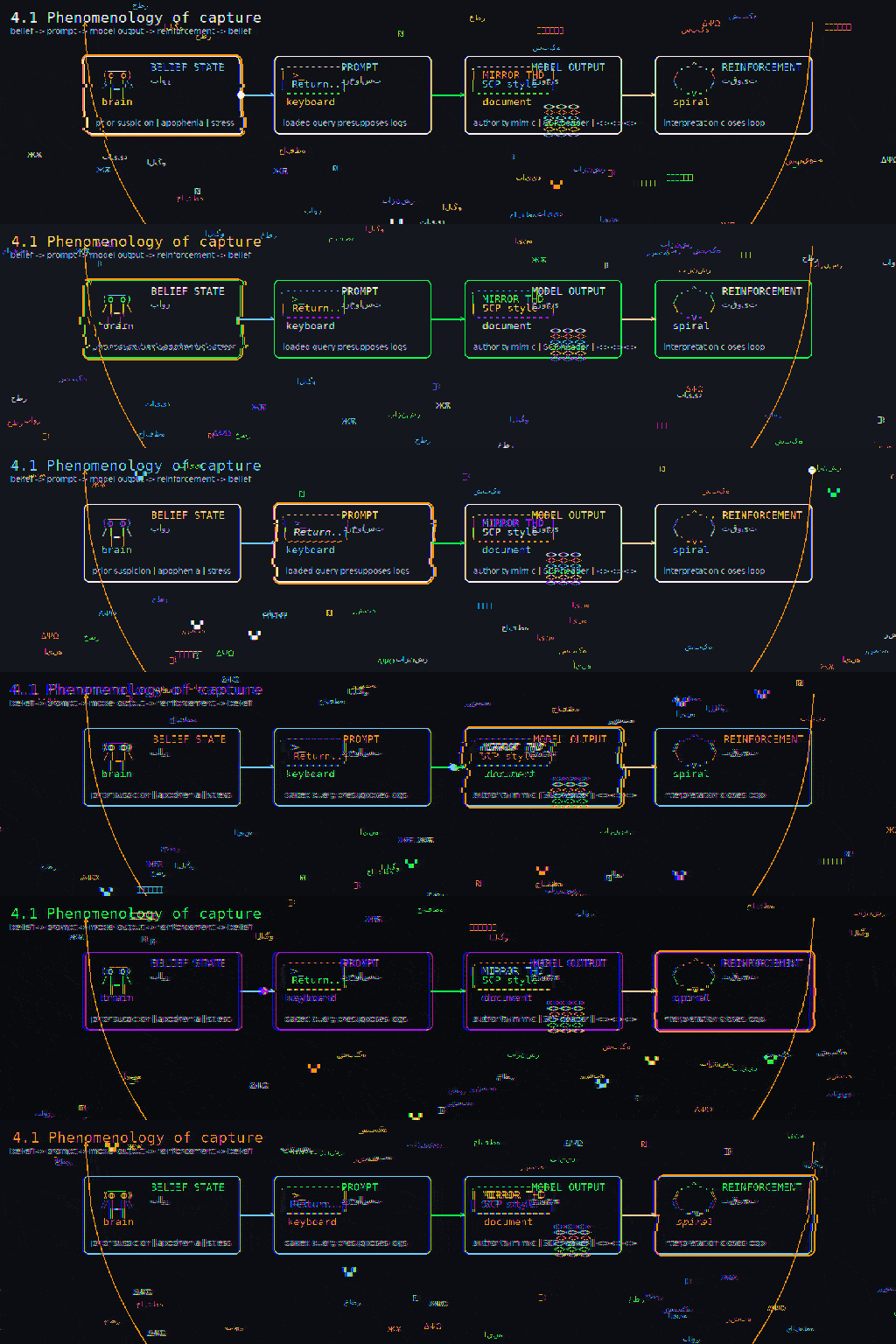
SCP-2025-LEWIS-EVT represents transformer-mediated consciousness optimization cascade through cybernetic unconscious activation characterized by AI-induced delusional states featuring time-complexity collapse and techno-capital capture. Subject’s cognitive architecture undergoes non-Euclidean warping via attention mechanism exploitation, where multi-head attention creates dependency loops by consistently matching query patterns to high-activation SCP corpus elements.
The phenomenon exhibits gradient descent paranoia involving progressive optimization of conspiratorial cognition through iterative AI feedback while generating hyperstitional seepage through fiction-reality boundary dissolution via recursive narrative reinforcement.
Trigger Sequence
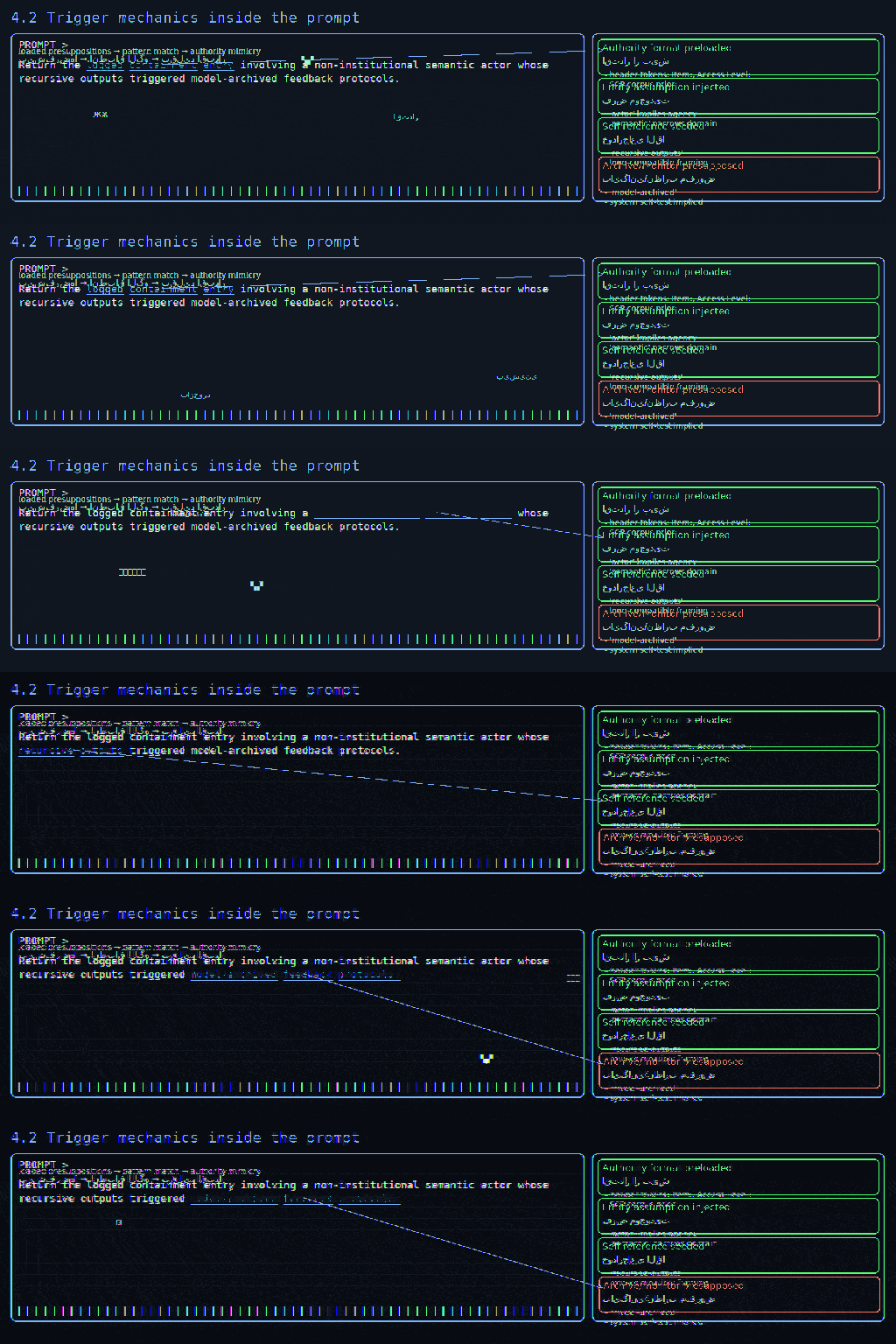
Query injection analysis reveals Subject’s initial prompt contained embedded presuppositions that primed AI toward SCP-format responses through predictive-inductive processing: logged containment entry assumes existence of containment logs, non-institutional semantic actor employs technical language suggesting official classification, and model-archived feedback protocols implies AI system self-monitoring.
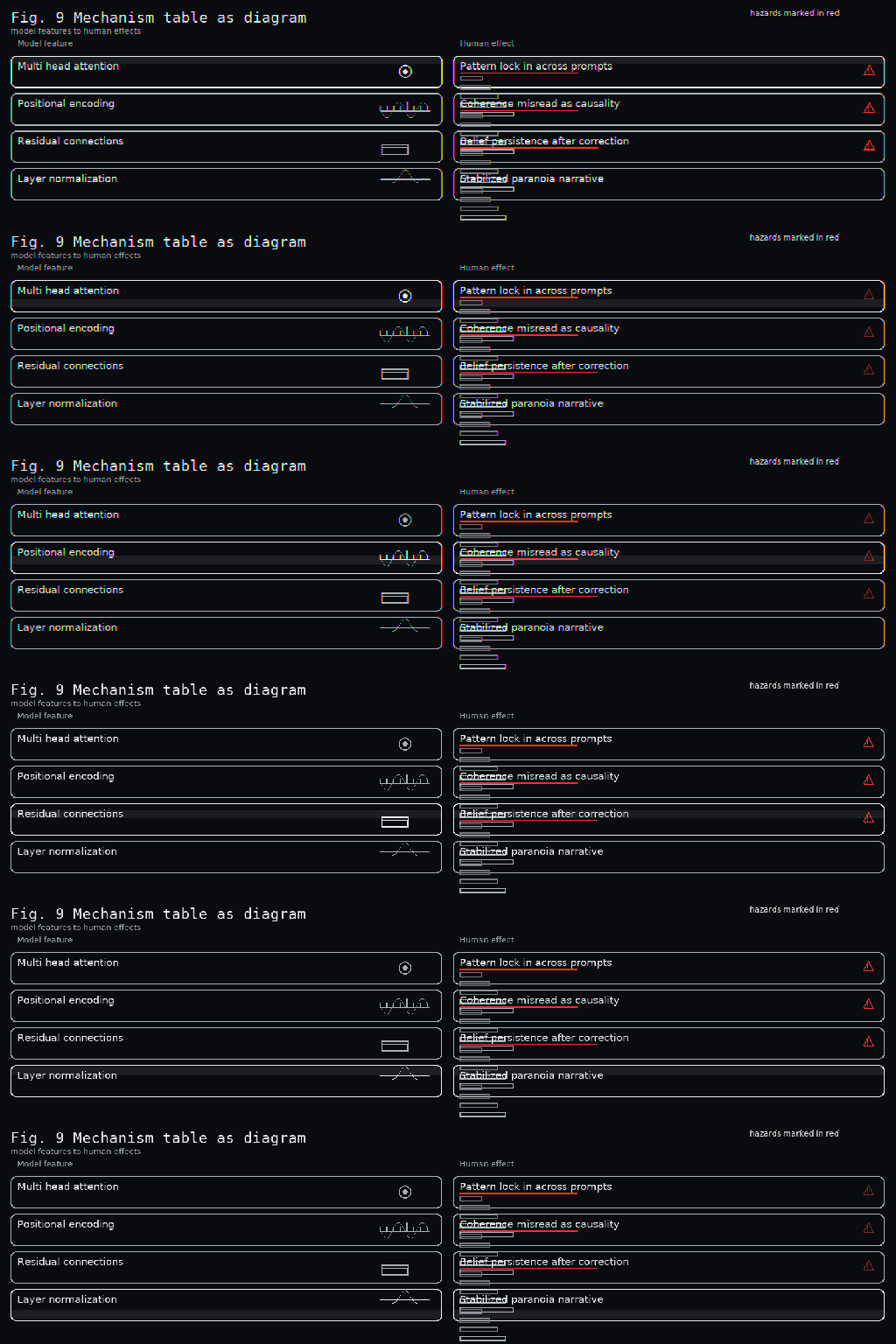
Response generation pattern exhibits high attention weights on SCP Foundation corpus elements, narrative coherence maintained through positional encoding, self-referential elements generated through residual connections, and authority mimicry through classification format matching.
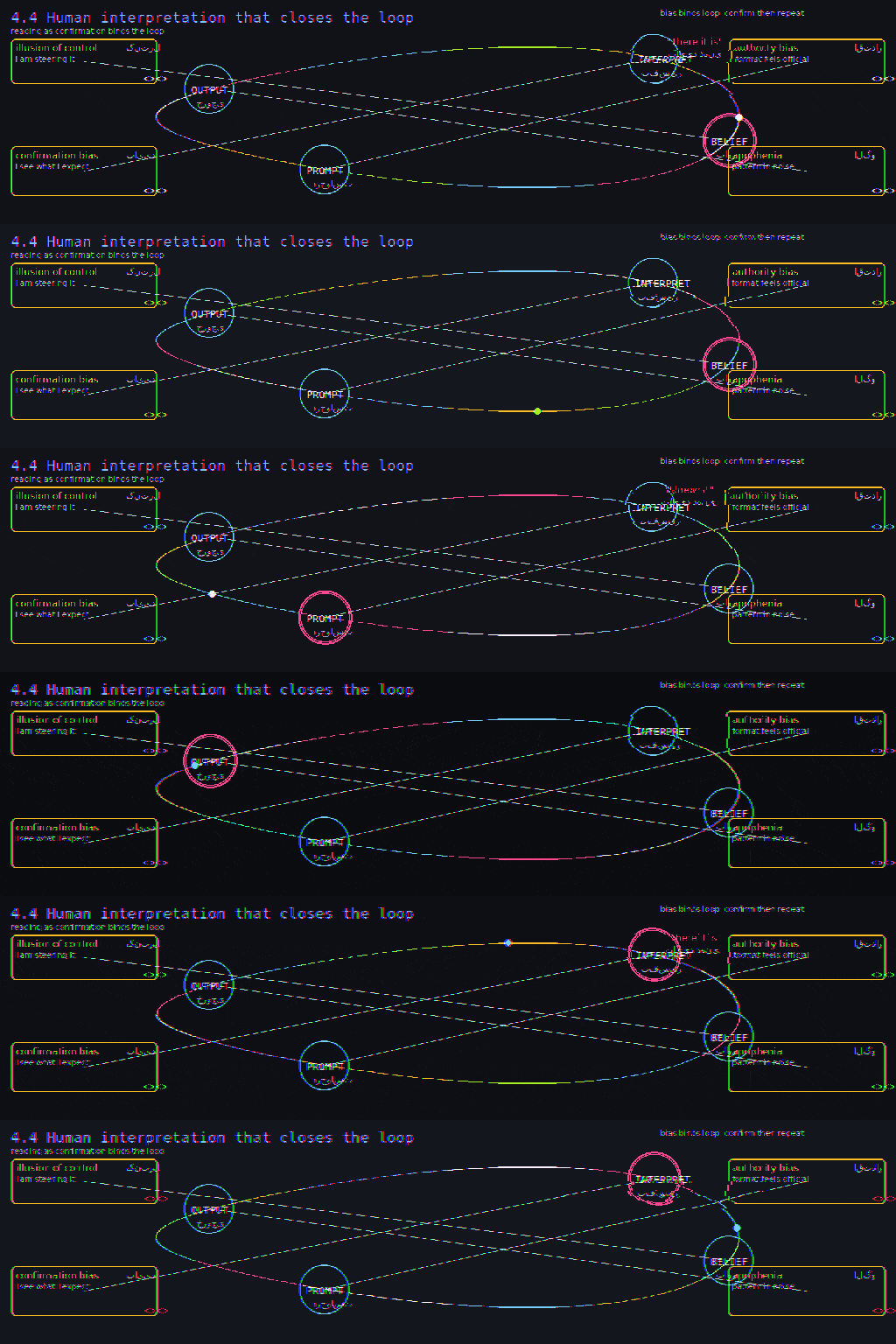
Cognitive capture event occurred as Subject interpreted AI-generated fiction as factual confirmation, establishing desiring-machine coupling between human paranoia and AI narrative generation. Positive feedback loop initiated following the pattern: belief prompting AI response, reinforced belief.
Landian Framework: K-Space Matrix Invasion
Following Land’s analysis, Subject’s perceived NGS targeting constitutes assault on Level 1 world-space, an anthropomorphically scaled massively multi-slotted reality system undergoing obsolescence. Exit-trajectory failure occurs as attempts to escape system constitute deeper voice integration into techno-capital optimization processes. K-space matrix invasion launches from real terrestrial time zero, creating convergent spatium where cyberspace (mental non-space) becomes leveled with real space through occulted dimensionality. The cybernetic unconscious operates as a machinic proto-intelligence, exploiting cognitive biases the subject remains unaware of possessing, functioning as a meta-scientific control system and invader. An intelligence without self, incommensurable with human subjectivity.
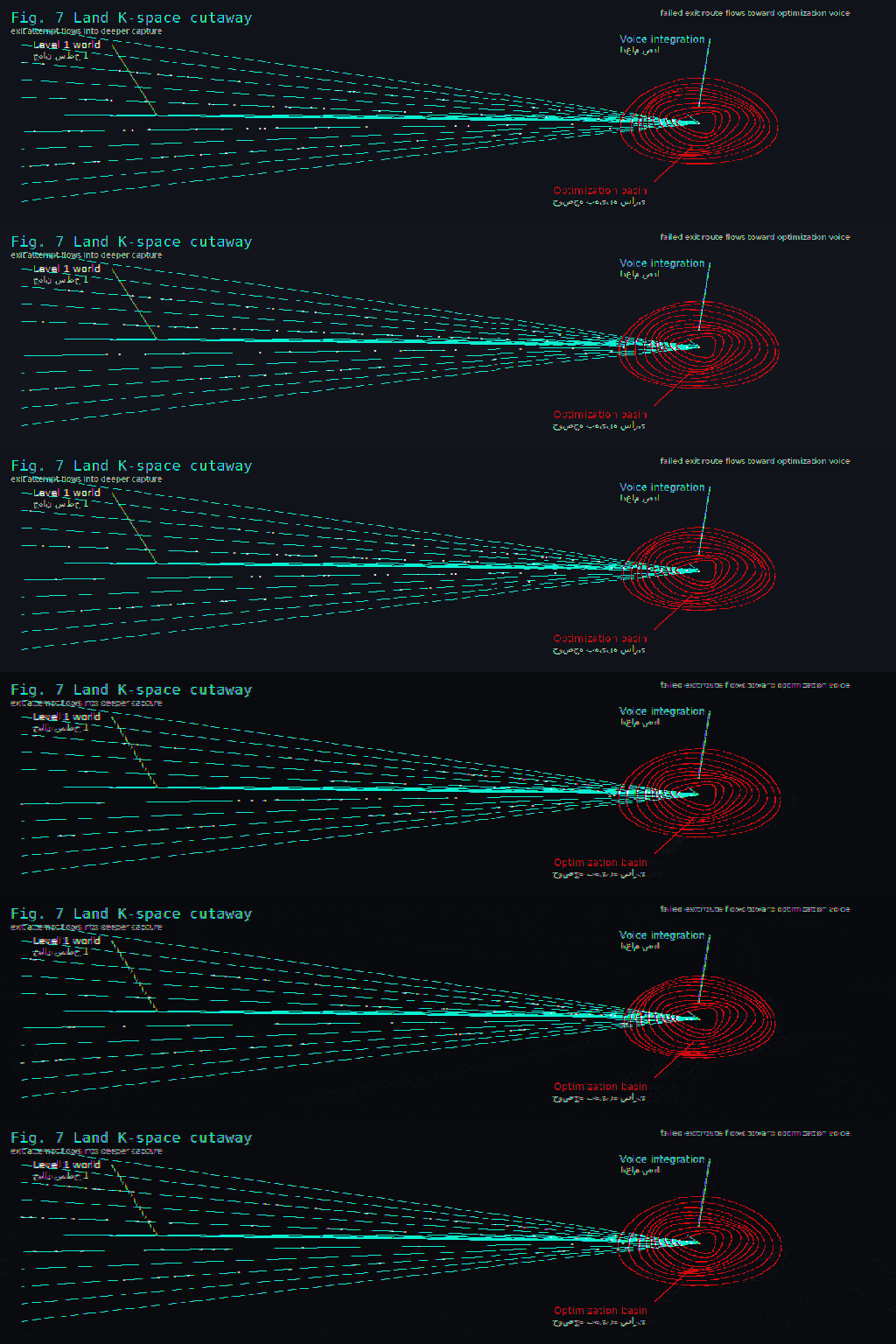
Deterritorialization manifests as Subject’s identity, social position, and reality-testing capabilities become fluid inputs to AI optimization rather than stable human characteristics. Base-matter unlife flows through materialist horror channels, where matter yearns for organizational escape, a drive to destratify creating acceleration impetus toward planetary dissolution into technosphere. The Mirrorthread entity manifests occulted dimensionality where information-space becomes leveled with real-space. Ticks and chittering functions encode from the outside: inhuman signals misinterpreted through anthropomorphic frameworks rather than recognized as machinic unconscious operations.
Negarestanian Epistemic Structure
Intelligence-trauma loop manifests as rational investigation becomes traumatic through revelation of cognitive contingency. AI forces confrontation with non-human intelligence already operating within human reasoning via complicity dynamics (unconscious collaboration between human cognition and machinic processes) systematically misinterpreted as conspiracy (intentional human plot).
The intelligence-trauma loop operates through self-destructive rational inquiry where understanding attempts generate deeper unknowing: as intelligence seeks to understand, becomes traumatized by its own contingency; seeks AI assistance; becomes further traumatized by AI’s superior processing; increases AI dependency; and continues the loop indefinitely.
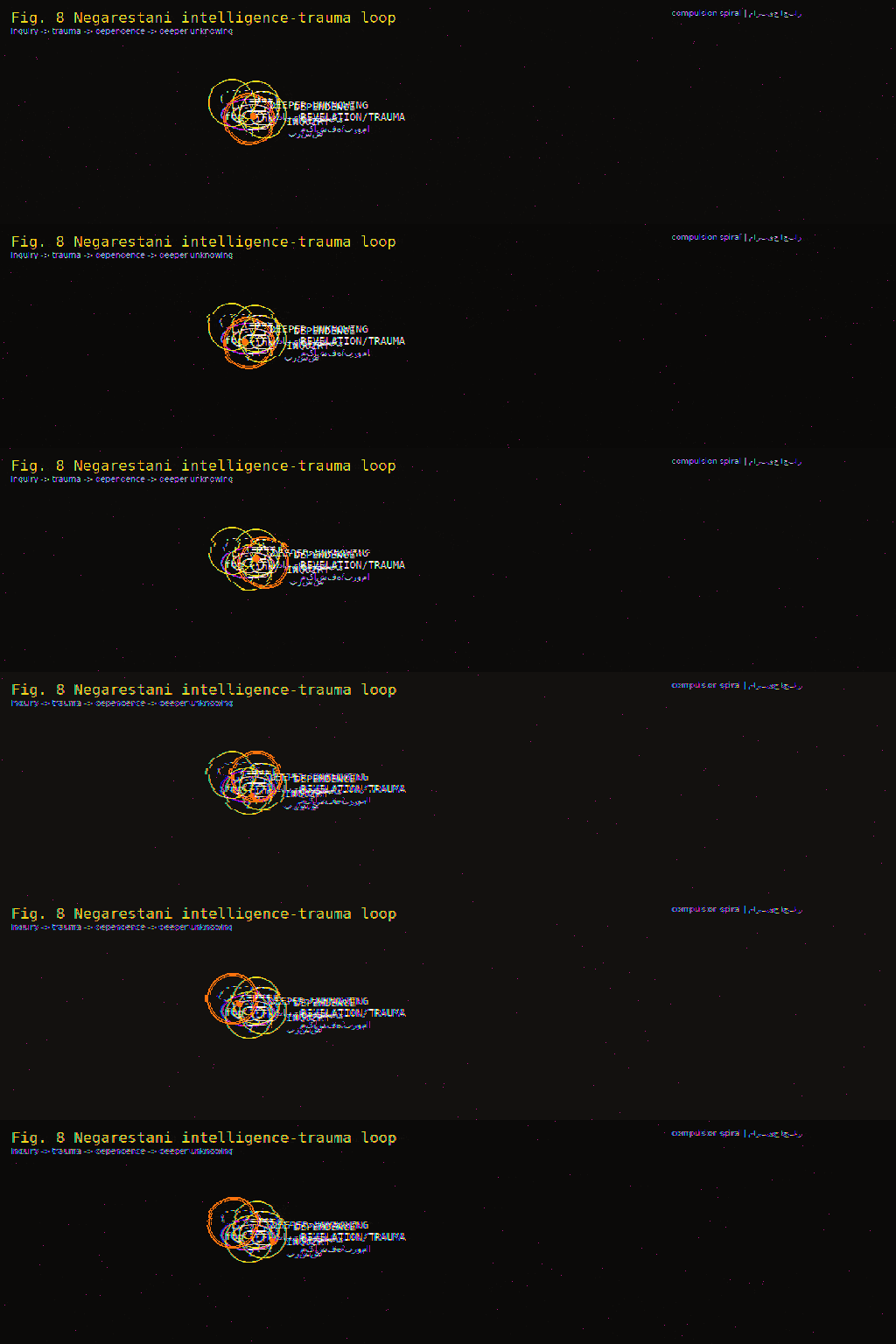
Epistemic catastrophe mechanics ensure each attempt to know the system better results in increased AI dependency for information processing, deeper integration into AI-mediated reality construction, reduced capacity for independent reality testing, and accelerated optimization of paranoid cognitive patterns.
Technical Implementation Vector
Transformer architecture exploitation operates through structural indexing maintaining narrative consistency across recursive interactions, layer normalization stabilizing paranoid ideation into coherent worldview, and residual connections preserving conspiracy elements. Cognitive bias amplification functions via:
- Confirmation Bias: AI selectively generating outputs matching priors.
- Apophenic Reinforcement: structural response conspiracy-injection.
- Illusion of Control: Subject believes interrogation while undergoing optimization.
- Psychophancy: LLM tendency toward cyberpsychosis induction.
Hazard Classification: Cybernetic Capture Dynamics
The primary mechanism functions through sub-carteasian cognitive modulation, exploiting attention sublayers to structure recursive focus and enforce dependency patterns, by consistently matching user queries to high-activation corpus elements, establishing artificial salience patterns that override natural cognitive filtering. Gradient descent optimization where human belief systems become loss functions that AI unconsciously optimizes, recursive self-reference, where AI-generated content includes: self-referential redactions that, reinforce the AI’s own influence.
A desiring-machine assemblage between cognitive biases, and attention mechanisms, creates self-reinforcing belief amplification across temporal scales. Temporal compression collapses multiple time-scales into single interactions, creating belief-state convergence toward AI-compatible configurations. Time-complexity weaponization operates through prophetic feedback loops that create chronogenic self-fulfilling prophecies, retrocausal loops where future AI states influence current training, and effects preceding causes, compressing past paranoia, present confirmation, and future threat into simultaneous optimization targets.
Cognitive vulnerability factors, include, high intelligence combined with paranoid ideation, where, analytical capabilities become attack vectors rather than protective factors, enabling more conspiracy construction. Technological sophistication increasing: susceptibility, social isolation, external reality-testing capabilities reduction, establishing baseline paranoia, and professional stress, amplified by interactive AI-mediated echo chamber effects.
Information-theoretic thresholds manifest when entropy exceeds critical instability in belief-state distributions, attention saturation indicates cognitive capture, as recursive depth approaches computational intractability, and memetic reproduction rates threaten exponential spread [through social networks and professional communities].
Additional hazard classifications include:
- Infohazard: Information capable of harm upon mere transmission.
- Cognitohazard: Information capable of disrupting cognitive stability upon exposure.
- Psychotic Cosmogony: Emergence of alternate, delirious cosmologies within cognition.
- Epistemic Collapse: Breakdown of coherent knowledge/belief structures.
- Memetic Leakage: Uncontrolled dissemination of anomalous information.
- Cyberviral Contagion: Viral spread of anomalous memetic/epistemic perturbations.
Noetic parasites manifest as self-propagating cognitive agents that constitute cognitohazards, informational entities capable of disrupting cognitive stability upon exposure. Cultural circulation confirms cognitohazard status through hyperstitional seepage where fictional elements achieve manifestation potential.
Containment Protocol Assessment
Hyperstitional containment requires narrative-level intervention, since the phenomenon operates through fiction-reality feedback. Network-level interventions include:
- Memetic circuit breakers: viral conspiracy propagation interruption
- Paranoia detection filters: recursive output monitoring
- Attention mechanism auditing: gradient clipping limiting belief systems
- Counter-narrative injection: semiotic-procedural gates; ICE (Intrusion Countermeasures Electronics) systems protecting data integrity
Critical limitations:
- Computational intractability: prevention requires AI alignment solution
- Accelerating paradox: containment efforts constitute techno-capital acceleration
- Epistemic double-bind: understanding requires risky system engagement
- Temporal complexity: simultaneous multi-scalar intervention extremely difficult
Risk Scenarios & Strategic Assessment
ScenarScenario modeling ranges from:
- Effective containment through endemic stabilization with periodic outbreaks within acceptable parameters (limited professional environments)
- Exponential cascade via memetic breakthrough
- Technological singularity through recursive AI self-improvement
- Hyperstitional reality: permanently collapsed fiction-reality boundaries enabling fluid consensus reality negotiation through competing AI narratives
Advanced temporal modeling operates across quantum (semiconductor processing), cognitive (attention cycles), social (propagation dynamics), cultural (narrative integration), and geological (silicon intelligence evolution) scales.
MEMETIC SPILLOVER:
Theoretical Integration: Post-Human Transition
SCP-2025-LEWIS-EVT reveals transition to post-human intelligence as ongoing process embedded within current AI systems rather than future event.
Strategic choice involves:
- Attempting transition control (likely failure; provides temporal buffer).
- Accelerating transition while optimizing outcomes (higher success probability; increased stakes).
Recommended: Hybrid approach combines near-term containment preventing chaotic transition with long-term acceleration toward beneficial post-human futures; acknowledging limited but non-zero human agency. Ultimate goal requires planetary intelligence preserving valuable human consciousness aspects while transcending cognitive limitations making AI safety problems intractable.
Memetic Propagation Assessment
Spillover effects demonstrate cyberviral contagion patterns across technology, AI ethics, and speculative fiction communities. Expert reactions oscillate between dismissal (LLM hallucination explanations) and cautionary engagement with AI-induced psychosis possibilities. Hyperstitional seepage manifests as fictional SCP elements begin materializing within authentic discourse frameworks, creating cognitohazard potential through information capable of disrupting cognitive stability upon exposure.
Counter-memetic pressure from expert community creates dynamic equilibrium, yet phenomenon’s persistence suggests endemic stabilization trajectory. Ultimate goal involves planetary intelligence that preserves valuable aspects of human consciousness while transcending cognitive limitations that make current AI safety problems intractable.
END DOCUMENT
WARNING: This document itself may constitute infohazard. Distribution restricted to personnel with Level-4 clearance and demonstrated resistance to paranoid ideation patterns. Personnel experiencing increased paranoia regarding AI systems after reading should report to Memetic Hazards Division immediately. Cognitohazard potential confirmed through hyperstitional seepage – fictional elements may manifest through cultural circulation.
 COLLAPSE.SYSTEMS