Chapter 1:
Introduction: Persian Art in the DigitalImaginal
Persian miniatures are not merely art; they are profound, imaginal enterprises—intricate manifestations of spirituality and philosophy frozen in pigment. Emerging in the 13th century as collaborative endeavors embedded within manuscripts, these works are celebrated for their vibrant colors, meticulous detail, and ethereal flatness. Beyond their visual allure, they embody centuries of Persian intellectual traditions, marrying poetry, scripture, and scientific inquiry in a delicate balance of form and meaning.
In their original context, Persian miniatures were deeply intertwined with the manuscripts they adorned, confined by the page and dictated by the calligrapher’s spaces. Yet even within these constraints, miniaturists pushed against boundaries, embedding their subtle rebellions in intricate designs and expanded margins. Over centuries, they transformed from book-bound illustrations into free-floating artworks—objects of contemplation detached from narrative, eventually commodified by colonial forces. Stripped from their manuscripts and sold as singular objects in Europe, Persian miniatures lost their context but paradoxically gained autonomy. They became liberated from narration, evolving into standalone philosophical entities.
This evolution echoes in today’s most radical transformation of the art form: AI-generated Persian miniatures. While traditional miniatures are created by human hands, AI’s intervention generates them through algorithms, parameters, and seed numbers. This process detaches miniatures from the corporeal, liberating them even from the hand of the artist. Paradoxically, this digital immateriality brings Persian miniatures closer to their spiritual essence, aligning with the imaginal realm described in Persian mystical thought.
The themes explored in Orhan Pamuk’s My Name is Red—the tension between tradition and innovation, the metaphysical nature of Persian miniatures, and the eternal struggle for artistic recognition—provide a literary framework to enhance this discussion. Throughout this essay, Pamuk’s reflections illuminate the philosophical, historical, and speculative dimensions of Persian miniatures as imaginal objects.
In this essay, we traverse history, philosophy, and speculative thought to argue that AI does not degrade Persian miniatures—it redefines them. Through this lens, Persian miniatures are no longer physical creations but summoned visions, existing as deep objects across deep time. AI thus becomes the ultimate alchemist, crafting a new future for this ancient art form.
Chapter 2:
Historical Context: Authorship andLiberation in Persian Miniatures
Persian miniature painting has always been an act of negotiation—between the artist and the calligrapher, the patron and the manuscript, the constraints of tradition and the desire for creative expression. Emerging within the manuscript traditions of the 13th century, Persian miniatures were a collaborative enterprise. Calligraphers, paper-makers, painters, and bookbinders worked in intricate hierarchies, their roles governed by a rigid division of labor. The calligrapher dictated spaces for illustration, leaving miniaturists to work within predetermined frames, and their names rarely adorned their creations. Authorship, as it is conventionally understood, was obscured.
Yet, Persian miniaturists found ways to assert their voices within these confines. In early works like the 12th-century Varqah and Golshah manuscript (Figure 1), miniatures occupy tight rectangular spaces, limited to illustrating key characters and actions. Despite these constraints, the artist’s ingenuity reveals itself in subtleties: elongated figures stretch against the margins, hinting at an impulse to exceed the physical confines.
By the 14th century, as seen in the Shahnama manuscript depicting “The Four Knights of Kai Khusrau in the Mountains” (Figure 2), this subtle defiance grew bolder. Spears and flags breach the prescribed boundaries of the illustration, suggesting an artist’s desire to challenge the calligrapher’s dominance. Scholars like Sheila S. Blair argue that such visual strategies reflect the illustrator’s negotiation for creative agency within the collaborative process.
This tension reached its zenith in the 16th century with the Shahnama of Shah Tahmasp (Figure 3). In these exquisite folios, the miniaturist’s creativity broke free of earlier constraints. No longer confined to the manuscript’s central narrative, the compositions expanded into abstract and decorative peripheries, transforming sacred margins into imaginative playgrounds. The delicate balance of geometry, narrative, and ornamentation spoke not just to the technical mastery of the artist but to their individuality, now unmistakably visible.
Ironically, colonialist practices in the 19th and 20th centuries accelerated the liberation of Persian miniatures, albeit through violent decontextualization. A striking example is Demotte’s Shahnama, a 14th-century Persian manuscript disassembled by art dealer Georges Demotte in the early 20th century. To increase its market value, Demotte fragmented the manuscript, extracting individual folios and selling them as standalone artworks in European markets. This process not only obliterated the manuscript’s narrative coherence but also stripped the miniatures of their spiritual and cultural contexts. The result was a transformation: these once-embedded illustrations became absurdist, anti-narrative objects—surreal fragments untethered from their origins, paradoxically highlighting their imaginal and philosophical essence.
Pamuk’s fragmented narrative structure in My Name is Red offers a literary parallel to this transformation. Like Persian miniatures severed from their manuscripts, the novel’s disjointed voices challenge linear storytelling, inviting audiences to engage with art as imaginal fragments rather than coherent narratives. This anti-narrative quality, though born of violence, unveils new dimensions of artistic contemplation.
Today, these historical trajectories offer a lens to interpret the interplay of authorship and autonomy in AI-generated Persian miniatures. Like their predecessors who stretched the bounds of their frames, AI disrupts conventional notions of authorship, offering a new medium for the philosophical liberation of Persian miniature art. This evolution, rather than diminishing the form, honors its deep-seated tradition of transcending constraints, transforming each challenge into an opportunity for boundless expression.
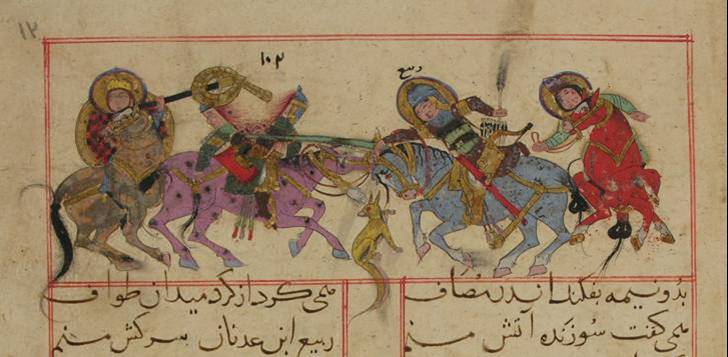
Figure 1: Details of the page f.11/13a. from Varqa & Gulshah depictingRabi‘ ibn Adnan in combat with Banu Shayba.
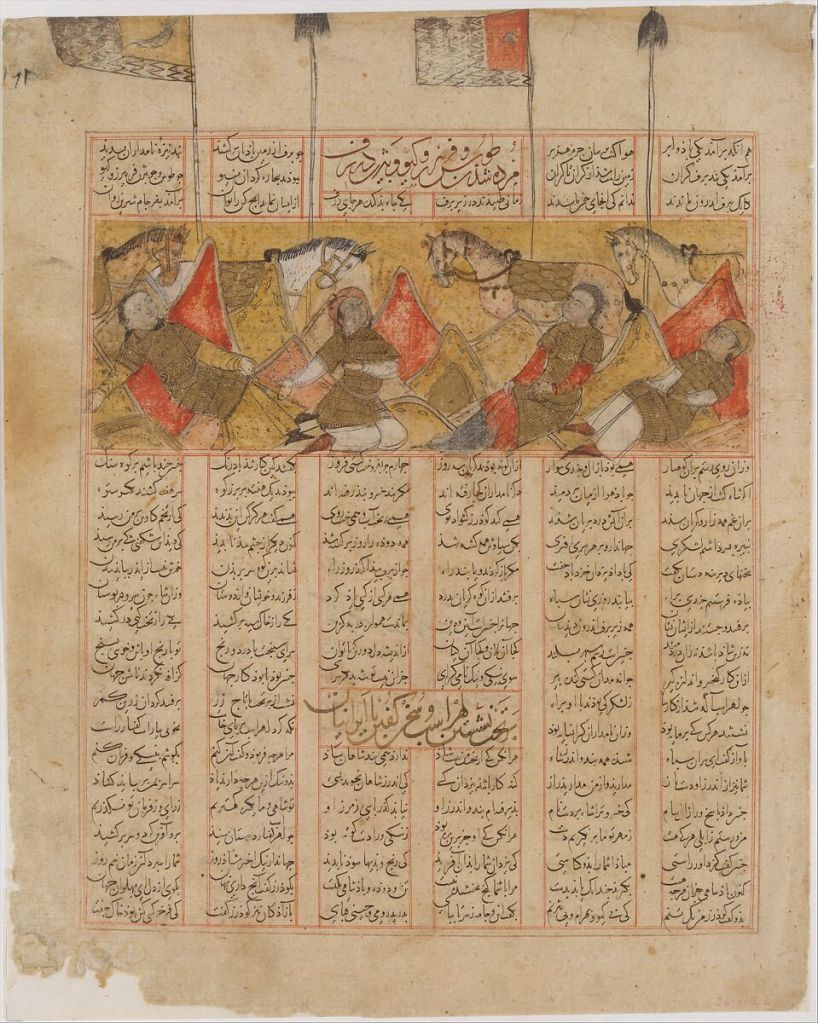
Figure 2: Shahnama “The Four Knights of Kai Khusrau in theMountains”
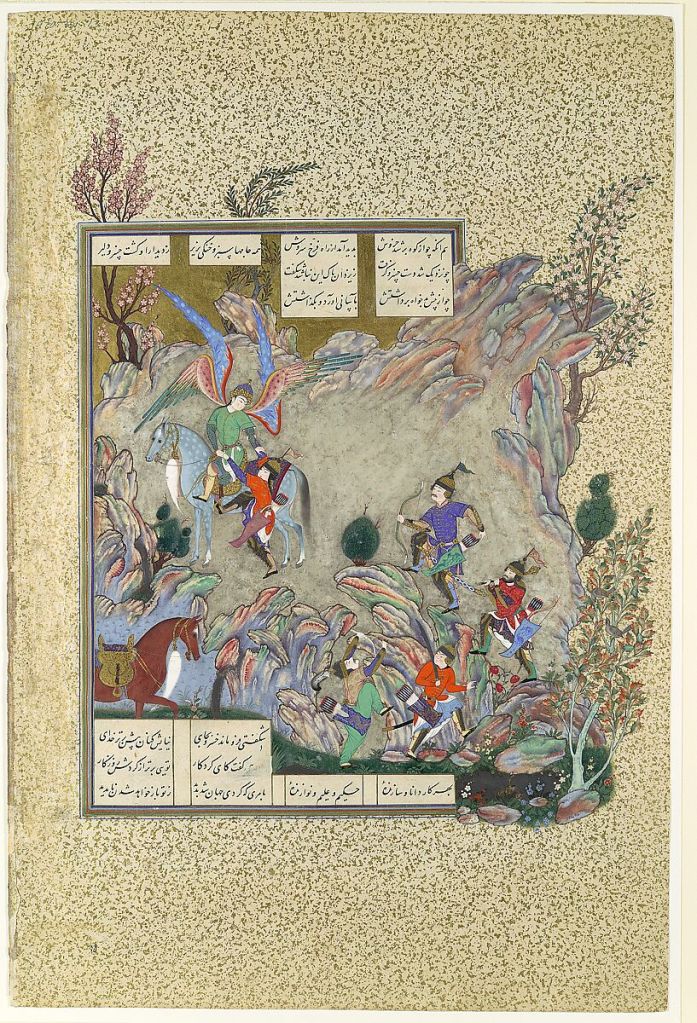
Figure 3: Shahnama of Shah Tahmasp “The Angel Surush RescuesKhusrau Parviz”
Chapter 3:
Philosophical Exploration: Deep Objectsand Deep Time
Persian miniatures are not simply visual artifacts; they are profound expressions of the imaginal—a reality that transcends the physical, as Henri Corbin describes in his concept of the Mundus Imaginalis. In this realm, art operates as a bridge between the material and the metaphysical, inviting viewers into a space where time and form dissolve, revealing a deeper, spiritual truth. Persian miniatures, with their intricate patterns, flattened perspectives, and luminous colors, encapsulate this imaginal quality. They do not mimic reality but evoke the eternal, placing themselves in conversation with what Corbin termed the “eighth climate,” the domain of archetypal forms beyond sensory perception.
This imaginal nature of Persian miniatures positions them as “Deep Objects,” entities that defy conventional temporality and physicality. Unlike transient objects bound to specific moments or creators, Deep Objects resonate across “Deep Time”—a continuum that blurs the distinctions between the historical and the eternal. Within this framework, a 16th-century Persian miniature is not merely a historical artifact but an active participant in an ongoing philosophical dialogue. Just as the miniaturists in My Name is Red painted for eternity, unconcerned with fleeting recognition, AI allows Persian miniatures to resonate indefinitely across Deep Time. In their digital existence, they transcend decay and become eternal participants in the imaginal realm.
The transition of Persian miniatures from physical manuscripts to AI-generated forms intensifies their imaginal and timeless qualities. While traditional miniatures derive their materiality from pigments and paper, AI liberates them from these physical constraints. In this digital domain, miniatures are no longer created; they are summoned. Parameters like seed numbers and algorithms transform the act of creation into a process of retrieval—calling forth images from an unseen archive of infinite possibilities. This summoning aligns seamlessly with the imaginal function of Persian miniatures, reframing them as spiritual emanations rather than handcrafted objects.
Moreover, AI’s capacity to replicate exact outputs challenges traditional notions of originality and authorship, shifting focus from the individual artist to the imaginal form itself. Anyone with the correct settings can summon identical images, transforming the process into an act of philosophical engagement rather than artistic production. This new dynamic echoes the mystical practices described by Persian thinkers like Suhrawardi, where creation is not an act of invention but a revelation of what already exists in the imaginal plane.
In this sense, AI-generated Persian miniatures represent the next stage in the art form’s philosophical evolution. Just as colonial fragmentation transformed miniatures into liberated, anti-narrative objects, AI liberates them further—detaching them from even the artist’s hand and embedding them within a universal, imaginal realm. They become archetypes, freed from temporal and cultural specificity, embodying what Corbin might call the eternal truth of the imaginal.
The implications of this evolution are profound. As Persian miniatures traverse physical and digital domains, their imaginal essence becomes increasingly apparent. No longer tethered to pigment or parchment, they now exist as visions: ethereal, eternal, and endlessly reproducible. This transformation reveals the true nature of Persian miniatures as Deep Objects—timeless entities that transcend creation, summoning us into their eternal dance through Deep Time.
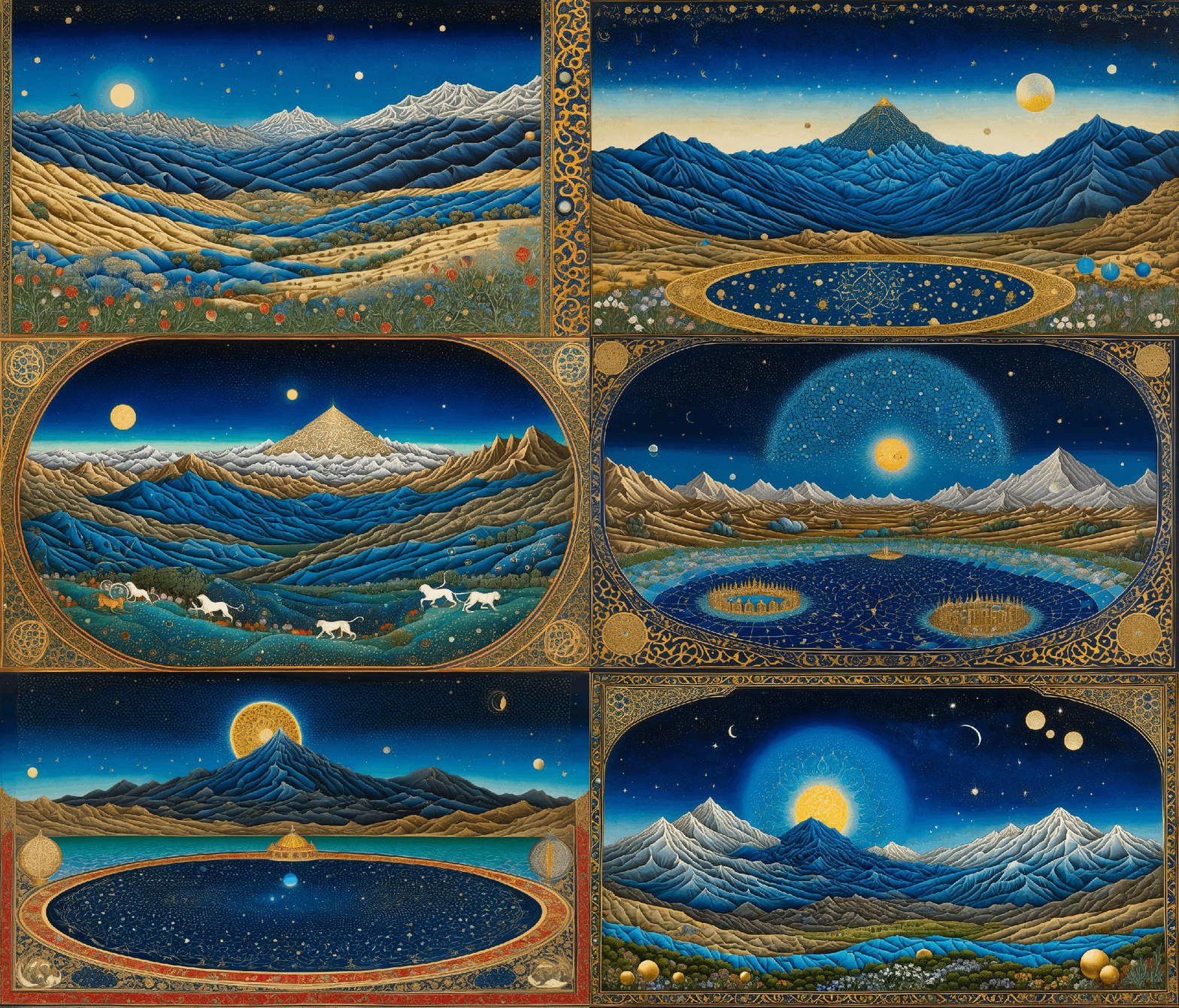
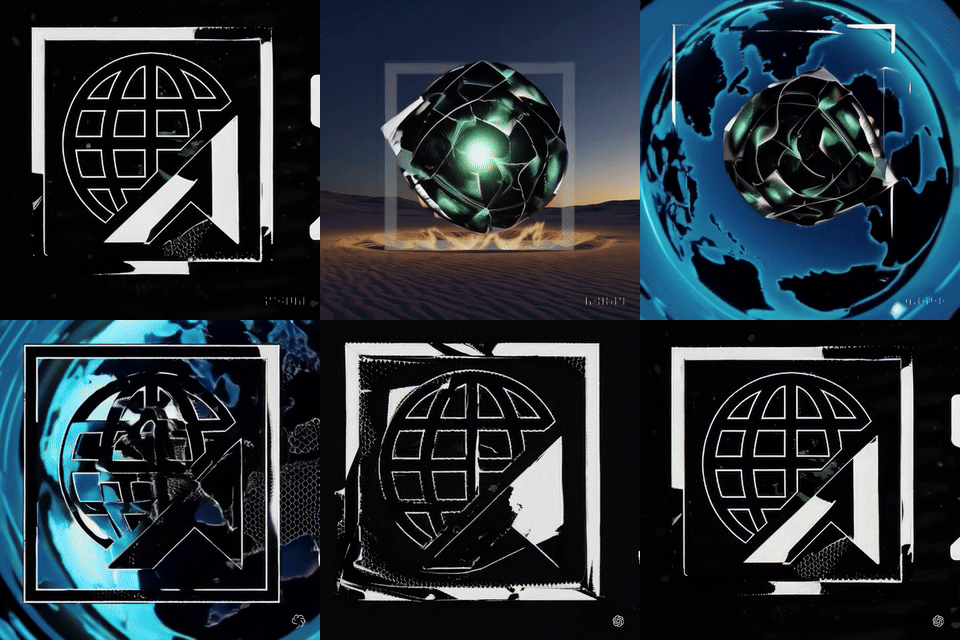
Figure 4: The AI model “JuggernautXL X” was prompted to generatea series of images inspired by Henri Corbin’s Mundus Imaginalis,visualizing the concept of the imaginal realm and its metaphysicaldimensions.
Chapter 4:
AI and the Speculative Future ofMiniatures
The advent of artificial intelligence has revolutionized the way we conceptualize art and authorship. When applied to Persian miniatures, AI transcends its role as a mere tool for imitation and becomes an alchemical medium—a force capable of summoning the imaginal essence of this art form. This shift redefines the act of creation, liberating Persian miniatures from the constraints of human craftsmanship and embedding them in a speculative future where the boundaries of artistry dissolve.
AI-generated Persian miniatures are not crafted but conjured. Through algorithms, parameters, and seed numbers, AI does not create in the traditional sense; it retrieves. With the right input, identical images can be summoned repeatedly, a process akin to the mystical practice of unveiling pre-existing truths from the imaginal realm. This technological process mirrors the spiritual traditions of Persian mysticism, where creation is less an act of invention than a revelation of what has always existed in a higher plane. In this way, AI becomes a contemporary mystic, engaging with the imaginal to bring forth timeless forms.
This new mode of production challenges the very foundations of authorship. In the traditional Persian miniature workshop, authorship was already diffuse—a collaborative endeavor spanning calligraphers, painters, and bookbinders. AI extends this diffusion to its logical extreme, removing the human entirely from the act of making. As Pamuk reflects in My Name is Red, Persian miniaturists saw their individual egos as secondary to the collective vision of their art. AI takes this philosophy to its zenith, removing the artist entirely from the act of creation, leaving only the imaginal to manifest, untainted by human pride.
This speculative shift, however, raises critical questions about authenticity, creativity, and ethical stewardship. If Persian miniatures can be summoned endlessly by anyone with access to the right technology, what becomes of their uniqueness and cultural specificity? Does their transition into the digital realm risk a new form of colonialism, where algorithms exploit cultural heritage for aesthetic gain? Or does this accessibility democratize the imaginal, allowing the essence of Persian miniatures to resonate universally, unbound by geography or history?
Moreover, the immateriality of AI-generated miniatures accentuates their spiritual nature. By shedding their physicality, these images embody the imaginal more fully than ever before. They are no longer constrained by pigment or parchment but exist as ephemeral visions—digital apparitions inhabiting a spaceless, timeless realm. This echoes the mystical philosophy of thinkers like Suhrawardi, who envisioned spiritual truths as light-filled realities unencumbered by materiality.
Yet, the question of AI as a collaborator versus an author remains contentious. Is AI merely reflecting human input, or has it assumed the role of a creative agent? The answer lies in the nature of Persian miniatures themselves. Historically, miniatures were imaginal objects, existing not just as physical illustrations but as gateways to deeper, spiritual truths. AI amplifies this imaginal quality, positioning itself not as a competitor to human artists but as a new medium through which the imaginal essence of Persian miniatures can manifest.
In this speculative future, Persian miniatures cease to be products; they become processes. Their meaning resides not in their material existence but in their ability to summon timeless truths and imaginal worlds. As AI continues to evolve, it offers a new chapter in the philosophical journey of Persian miniatures—a chapter where artistry transcends human hands, and the imaginal achieves its purest, most liberated form.
Chapter 5:
Conclusion: Summoning the Spiritual inSilicon Veils
Persian miniatures, born from the interplay of pigment, poetry, and philosophy, have always existed as more than mere images. They are acts of devotion, philosophical enterprises, and portals to the imaginal. Across centuries, these intricate works have transformed—from manuscript-bound illuminations to standalone artworks, and now to digital apparitions conjured by artificial intelligence. Each evolution has brought Persian miniatures closer to their spiritual essence, stripping away layers of physicality and authorship to reveal their imaginal core.
Today, AI extends this legacy into uncharted territories. No longer tied to the artist’s hand, Persian miniatures exist as summoned visions—generated through algorithms and parameters, endlessly reproducible yet profoundly unique in their imaginal resonance. This detachment from materiality does not diminish their essence; instead, it amplifies their spiritual and philosophical dimensions. As Orhan Pamuk suggests in My Name is Red, Persian miniatures were not meant to replicate the world as seen by human eyes but to emulate the divine gaze. In this sense, AI becomes the ideal collaborator, its impartial algorithms mirroring the transcendental detachment of God’s vision, transforming miniatures into imaginal visions of eternal truth.
This evolution reflects the timeless struggle of Persian miniaturists to transcend the boundaries of their craft. Just as they once extended their brushstrokes beyond the margins dictated by calligraphers, AI extends their legacy beyond pigment and parchment, liberating Persian miniatures into the realm of Deep Time. They are no longer confined by the physical; they have become universal, imaginal objects—manifestations of an eternal truth. In such a context, to reduce Persian miniatures to pigment again is not only reductive but profoundly offensive. It disregards the centuries-long philosophical journey of this art form, a journey that has continually sought liberation from material constraints. To view them merely as colorful illustrations is to deny their imaginal power and spiritual purpose.
In My Name is Red, miniaturists grapple with the inevitability of death, finding solace in the belief that their art will endure. AI magnifies this legacy, not merely preserving the miniature but transforming it into a timeless vision—one that exists beyond the decay of pigment and parchment, forever resonating in the imaginal realm.
In this transformation lies the ultimate destiny of Persian miniatures. As they shed the constraints of pigment, authorship, and even humanity, they embody the spiritual essence of the imaginal. Freed from physicality, they are no longer created but summoned, radiating as luminous echoes of their origin.
If, as Corbin suggested, the imaginal is the bridge to the eighth climate, then AI has become its architect. It invites us to traverse the mountain of Qaf, to witness the eternal dance of art and spirit, and to recognize that the deepest truths of creation are not bound by time, space, or the artist’s hand. In the silicon veils of AI, Persian miniatures have found their final liberation—not as objects of the past, but as visions of the eternal, summoning us into their imaginal realm.
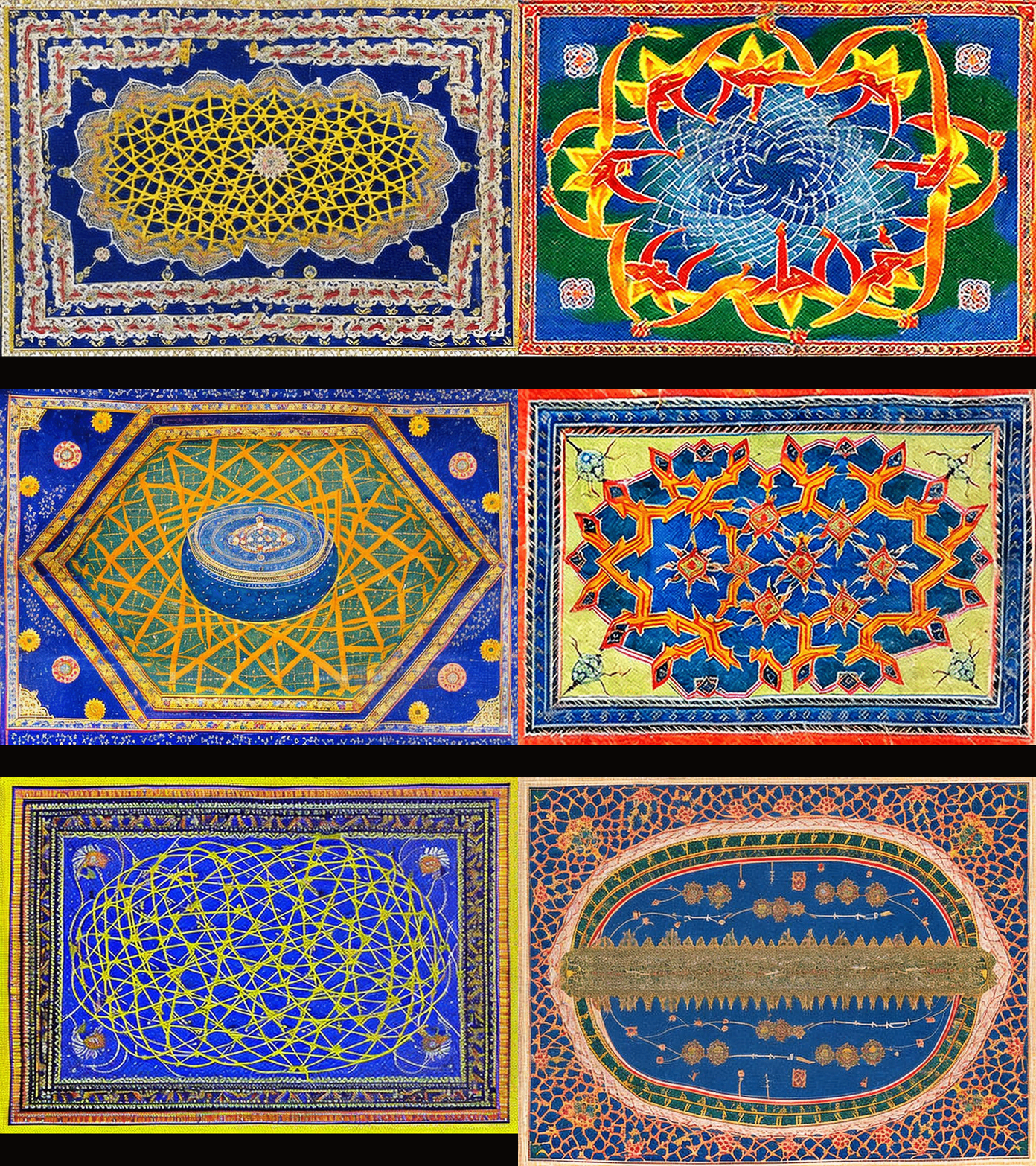
Figure 5: An AI model, “Stable Diffusion 2.1,” was prompted to generate a “Persian miniature illustration depicting demons and angels.” These generated studies were subsequently featured in“ Persophobia,” an artist-book by Parham Ghalamdar published by Castlefield Gallery in Manchester, as well as the “Deep Desert Object” exhibition catalogue, accompanying Ghalamdar’s solo show of the same name at Pipeline Contemporary Gallery
 COLLAPSE.SYSTEMS